
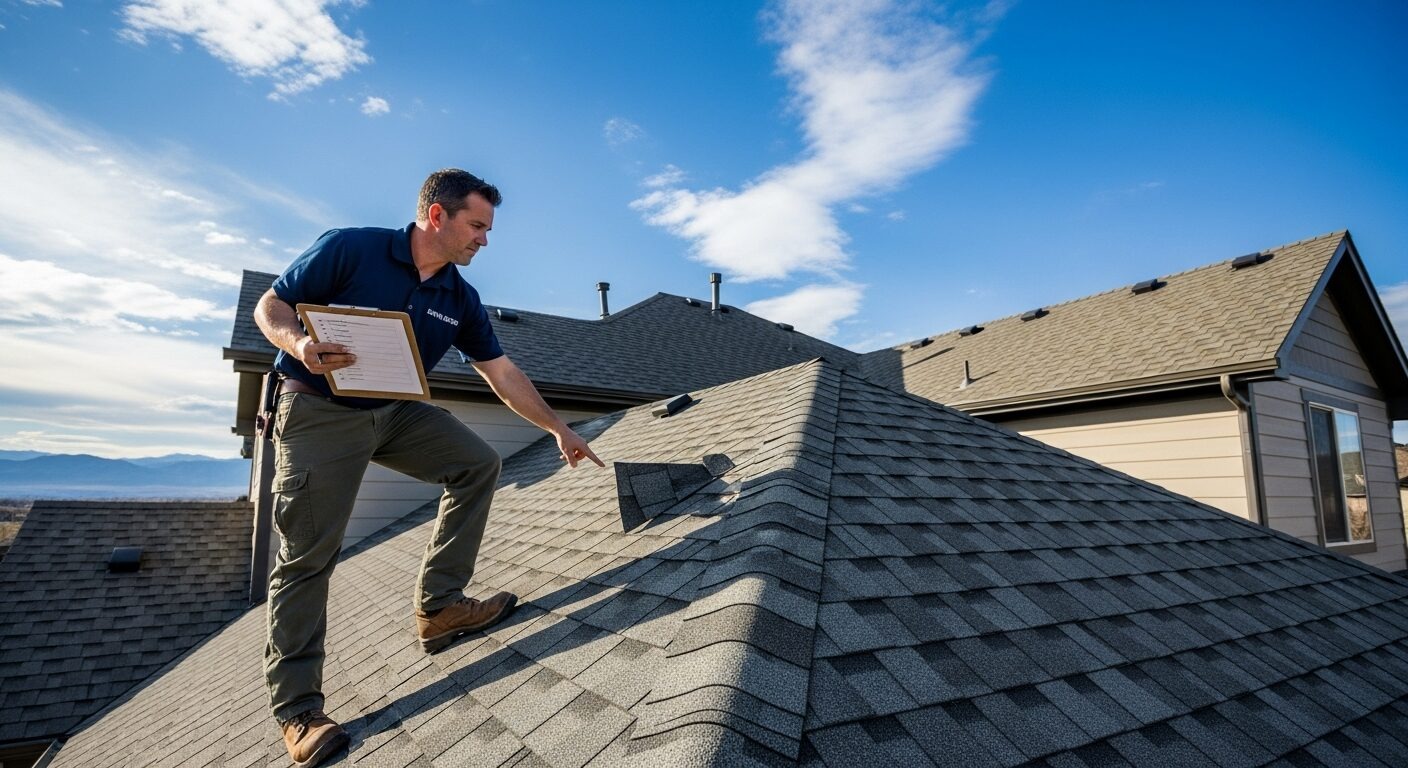
Your Denver Roof Inspection Checklist: What to Look For and When to Call a Pro
Your roof protects everything inside your home. But most homeowners wait until water drips through the ceiling before they think about it.
That’s expensive.
Colorado experiences about 94 hail events each year, leading to around $151 million in annual property losses. Denver’s most costly natural catastrophe was a $3 billion hail storm in 2017.
Regular inspections catch problems before they become disasters. This guide shows you what to check, when to check it, and when to stop checking and call someone who knows what they’re looking at.
When to Inspect Your Roof
You need to inspect your roof at specific times. Not randomly. Not when you remember. At specific times.
Twice a Year: Spring and Fall
Schedule comprehensive evaluations in spring and fall. These seasons let you prepare for extreme weather conditions.
Spring inspections reveal winter damage. Fall inspections prepare your roof for snow and reveal any potential hail damage you may have missed during the summer months.
Most roofs last 20 to 30 years with proper care. Simple maintenance tasks add years to your roof’s lifespan.
After Every Hail Storm
Denver gets hit hard by hail. Eastern Colorado regularly experiences hailstones 1-2 inches in diameter traveling at speeds up to 80 mph. In northeastern Colorado, hail can reach 4.5 inches.
That’s baseball-sized ice falling from the sky at highway speeds.
Inspect within a few days to a week after a hail event. Quick assessments catch problems before rain seeps in and prevent minor issues from becoming costly structural damage.
Here’s the problem: snow cover, ice buildup, and freezing temperatures can temporarily mask bruised shingles, loosened granules, or compromised flashing. Freeze-thaw cycles cause water to expand inside small cracks created by hail, slowly worsening the damage.
If a storm hits in winter, inspect again in spring.
After Any Severe Weather
High winds, heavy snow, rapid temperature changes. All of these stress your roof. Examine your roof after severe weather events even if you see no obvious problems. Hidden damage exists.
What to Check From the Ground
Start your inspection without climbing anything. You can spot many problems from your yard.
Shingle Condition
Look for: missing shingles (gaps in your roof coverage), curling edges (shingles that lift at the corners), cracked or broken shingles (visible damage or splits), granule loss (shingles that look darker or have bare spots), and sagging areas (sections that dip or look uneven).
Check your gutters too. Excessive granules in your gutters mean your shingles are deteriorating.
Flashing Inspection
Flashing seals the joints where your roof meets walls, chimneys, and vents. Look for rust or corrosion on metal flashing, gaps or separation from the roof surface, cracked or missing caulk, and bent or damaged sections.
Flashing failures cause most roof leaks. The roof itself is fine. The seal around penetrations fails.
Gutter and Downspout Check
Your gutters move water away from your roof and foundation. Look for sagging or pulling away from the roofline, visible debris or blockages, water stains on siding below gutters, and pooling water near your foundation.
Clogged gutters force water under your shingles. That water finds its way inside.
What to Check in Your Attic
Your attic tells you what’s happening to your roof before you see it from outside.
Look for Water Damage
Inspect your attic on a sunny day. Look for water stains on rafters or sheathing, daylight coming through the roof boards, wet or compressed insulation, and dark streaks or discoloration.
Water stains mean you have a leak. The location of the stain doesn’t always match where water enters. Water travels along rafters before it drips.
Check Ventilation
Poor attic ventilation is one of the most common problems when inspecting roofs. Most homeowners don’t know until there’s already thousands of dollars worth of damage.
Without proper attic ventilation, upstairs rooms become uncomfortably hot, and AC units run longer trying to keep homes cool. Attic temperatures can soar above 150 degrees Fahrenheit without proper ventilation.
Signs of ventilation problems: excessive heat in summer, moisture or frost on rafters in winter, mold growth in attic corners, rusty nails visible through roof sheathing, and compressed insulation.
Signs You Need Professional Help
Some inspections require professional expertise. You can look. You can’t always interpret what you’re seeing.
Stop inspecting and call a professional when you find: multiple missing or damaged shingles, sagging roof sections (indicates structural issues), active leaks, extensive granule loss, damaged flashing around chimneys or vents, interior water stains, or mold in your attic.
Why Professional Inspections Matter
DIY-ing anything relating to a roof can be dangerous. It’s easier to skip over problem areas when you don’t have roofing experience.
For warranty and claims you want a record from a licensed professional. Insurance adjusters work with strict claim guidelines. They don’t always catch every issue. A roofer can guide you on whether it’s worth filing an insurance claim.
Calling a trusted roofing contractor first for a professional damage assessment is advisable. A roofer spots problems you miss and knows which problems need immediate attention and which can wait.
Common Problems Denver Homeowners Miss
Hail Damage That Doesn’t Look Like Damage
Hail doesn’t always punch holes in your roof. Sometimes it just bruises shingles. Bruised shingles lose granules faster. They fail sooner. You won’t see the problem until the shingle starts curling or cracking months later.
Reports of baseball-sized hail nearly tripled from 2019 to 2023, rising from 12 to 34 incidents. That’s a lot of roofs taking hits.
Ice Dam Damage
Ice dams form when heat escapes through your roof, melting snow. The water refreezes at the roof edge, creating a dam. Water backs up under your shingles. You see the ice. You don’t see the water damage happening underneath until spring.
Ventilation Failure
Your roof cooks from below in summer and traps moisture in winter. Both shorten your roof’s life. Most homeowners never check their attic ventilation until something goes wrong.
Your Inspection Schedule
Spring (April-May): Complete inspection after winter weather. Fall (September-October): Complete inspection before winter. After every hail storm: Quick damage assessment. After severe weather: Visual check from the ground. Every 3-5 years: Professional inspection even if nothing seems wrong.
This schedule catches problems early. Early detection saves money.
Final Thoughts
Your roof is the most important part of your home’s exterior. It keeps everything else dry and protected.
Regular inspections extend your roof’s life. They catch small problems before they become expensive disasters. They give you peace of mind.
You can handle basic inspections from the ground and in your attic. When you find problems or aren’t sure what you’re looking at, call a professional.
The cost of an inspection is nothing compared to the cost of ignoring a problem until it forces your hand.
Check your roof. Know what’s happening up there. Fix problems when they’re small. That’s how you protect your home.
Frequently Asked Questions
How often should I inspect my roof in Denver?
Plan on a full inspection at least twice a year, in spring and fall, plus an extra check after any major hailstorm or severe wind event.
What can I check myself from the ground?
Look for missing, cracked, or curling shingles, damaged flashing around chimneys and vents, and clogged or sagging gutters and downspouts.
What attic warning signs mean I need a roofer?
Water stains on the decking, damp insulation, daylight coming through the roof boards, and poor attic ventilation all signal it is time to call a professional.
Why is a professional inspection worth it if my roof looks fine?
Hail bruising and ice dam damage often are not visible from the ground and do not show symptoms right away. A trained inspector can catch and document issues before they turn into leaks or insurance disputes.
What's a good year-round roof inspection schedule for Denver homes?
Spring and fall walkthroughs, a post-storm check any time hail or high winds hit your neighborhood, and a professional inspection every one to two years or before listing your home for sale.


